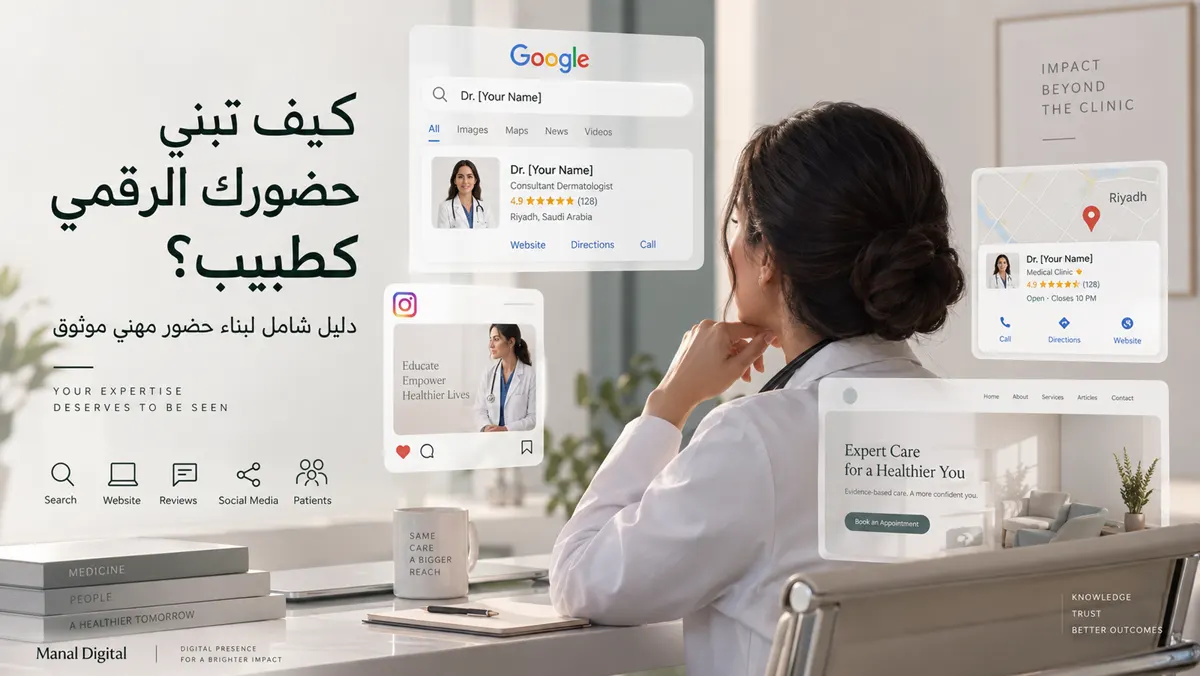
A doctor’s personal brand is the picture a patient forms about you before they meet you: who you are, what you specialize in, and whether they feel reassured with you. This picture forms whether you care about it or not. The difference is that a doctor who builds it consciously chooses what people know about them.
A personal brand is not fame, not follower count, and not a beautiful logo. A doctor with no active accounts may have a stronger brand than a doctor who posts every day, if what patients say about them is clear and consistent.
Why does the patient choose based on brand?
The patient cannot evaluate your medical skill before the appointment. So they rely on signals they understand: the clarity of your specialty, the way you explain, others’ experiences, and how professional what they see about you looks. These signals are the brand.
Even a patient who comes to you through a friend’s recommendation usually searches for you before booking. The recommendation opens the door; what they find about you decides whether they enter.
What is a doctor’s personal brand made of?
- Positioning: what exactly you are known for. "Dermatologist" is a general description, while "a dermatologist who focuses on chronic skin conditions" is positioning.
- The message: the idea that repeats in everything you say, such as clear explanation before any treatment decision.
- The tone: your way of speaking — are you calm and direct, or close and reassuring.
- Visual identity: the colors, fonts, and images that make your presence consistent and familiar.
- Evidence: credentials, content that shows your understanding, and real reviews.
- The experience: what the patient actually lives with you. This part is not created by any design, but it confirms or contradicts everything above.
How do you start building it?
Start with questions, not design:
- Which patients do you most want to reach you?
- What is the sentence you want a patient to say about you to a friend?
- What do you do with your patients that not everyone does?
The answers define the positioning and the message. After that comes the visual identity, then the website and Google profile, then content. This order prevents building a beautiful facade for an unclear message.
Common mistakes
- Trying to address everyone: a doctor who presents themselves for everything is not remembered for anything.
- Copying another doctor’s style: what works for someone else works because it resembles them.
- Constantly changing the look and tone: consistency builds familiarity, and familiarity builds trust.
- Exaggeration: preference phrases and promises usually violate medical advertising rules and make the patient doubt instead of trust.
Does a personal brand conflict with professional ethics?
No, if it is built on honest information and respect. A good brand for a doctor resembles the doctor themselves in the clinic: clear, calm, and does not sell more than it delivers. The problem is not in appearing, but in exaggeration, promises, and violating patient privacy.
If you want us to start with you from strategy through to identity, see our brand identity for doctors.
Read also: How do you build your digital presence as a doctor?
Frequently asked questions
Does an employed doctor need a personal brand?
Yes, especially if patients ask about them by name. The brand stays with you if you move, and benefits your employer while you are there.
Do I need to show my face in videos?
Not necessarily, but appearing builds trust faster. You can start with written content and professional photos, then video when you are comfortable.
How long does building a brand take?
The foundation — strategy and identity — takes weeks. Reputation accumulates with every patient and every piece of content over months and years.
Is the brand the same as the visual identity?
No. Visual identity is part of the brand, and it is the part that is seen. We explained the difference in detail in our article on the doctor’s visual identity.