

AI tools do not know you from nothing. They search the internet, gather what was written about you and what you wrote yourself, then summarize it into an answer. So your name appears in their answers when they find clear, matching information about you in more than one trusted source, and when it is easy for them to read.
Today’s patient is not satisfied with typing "dermatologist Jeddah" in Google. Some ask ChatGPT directly: "Who is a dermatologist specialized in treating acne in Jeddah?". And Google itself has started showing AI-written summaries above the results. In both cases, the patient reads a single answer instead of ten results, and the doctor absent from the answer is absent from the decision.
Where do these tools get their information?
Each tool has its own way, but the principle is similar:
- Google AI summaries rely on pages indexed in Google, and on Google Business Profiles.
- ChatGPT search relies on external search indexes, most notably Bing, and on bots that visit websites directly.
- Perplexity and similar tools search the web at the moment of the question, and cite their sources in the answer.
The practical result: if your website is not indexed, or your information is scattered and conflicting, these tools will not find anything to say about you.
First step: make your website readable
Some doctors’ websites block AI bots without their owners knowing. And some are built in a way that makes the text appear to the visitor only after the page loads, while the bot sees a nearly empty page.
- Make sure your robots.txt file does not block known search bots.
- Ask your website developer to confirm that page texts exist in the page itself, not built only after loading.
- Register your website in Google Search Console and in Bing Webmaster Tools.
Second step: write clear answers, not slogans
AI tools quote sentences that answer directly. A sentence like "we provide exceptional care" is not quoted, because it says nothing. But "Dr. So-and-so is a consultant dermatologist in Jeddah, focusing on treating acne and its effects" is a sentence that can be quoted as is.
- Start every page with a sentence that says who you are, what your specialty is, and where you work.
- Dedicate a page or section to each main condition you treat.
- Add real common questions your patients ask in the clinic, with short answers.
Third step: unify your information everywhere
If your specialty is written one way on Instagram, another way on the clinic’s website, and a third way on your Google profile, the tool hesitates to mention any of them. Use the same name, the same specialty description, and the same city across all platforms.
And add Physician-type structured data to your website. This data is not seen by the visitor, but it introduces your name, specialty, and official account links to search engines clearly.
Fourth step: be mentioned outside your website
AI tools trust more what others say about you. Useful sources for the doctor:
- A Google Business Profile under your name, with real reviews.
- Your page on the website of the hospital or complex where you work.
- Well-known appointment booking platforms in your country.
- Interviews or participation in conferences or articles that mention your name and specialty.
How do you know what these tools say about you?
Ask them yourself. Type in ChatGPT, Perplexity, and Google: "Who is Dr. [your name]?", then "Who is the best [your specialty] doctor in [your city]?". Record what appears, the sources it cites, and repeat the experiment every month. Any incorrect information that appears here usually comes from an old or outdated page that needs correcting.
If you want us to review how you appear today in Google and in AI tools, see our SEO service for doctors.
Frequently asked questions
Can you pay to appear in ChatGPT answers?
There is no official way to buy a place in the answers. Visibility comes from the clarity of your information and its availability in trusted sources.
Is regular SEO still important?
Yes. Most of these tools rely on search indexes, so a website that does not appear in Google or Bing has a lower chance of appearing in the answers.
The tool mentions incorrect information about me, what should I do?
Find the source of the information and correct it there, and publish the correct information clearly on your website and profiles. The tools update as the sources update.
How long does it take for the result to appear?
It varies by tool. Tools that search at the moment of the question may notice the change within weeks, while fully building a digital reputation takes months.
Related articles
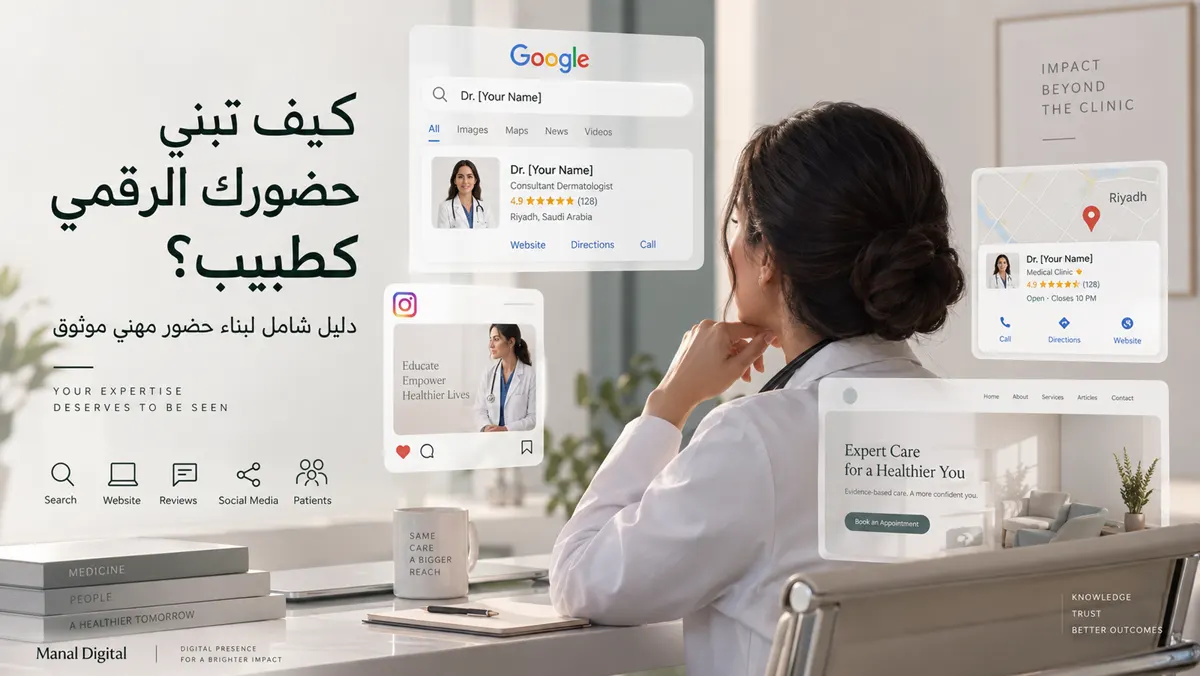
How Do You Build Your Digital Presence as a Doctor? A Complete Guide to a Trusted Professional Presence
A complete guide to building a trusted professional presence: from Google results, website, and reviews to content, the patient journey, and AI search readiness.
How Do Patients Search for Doctors on Google? And What Makes You Show Up Clearly
From the first word a patient types in Google to the moment they choose a doctor — understand how patients read search results and what makes your name appear clearly when they look for you.