

Many doctors start social media with the wrong question: “Which platform should I be on?” The answer they usually hear is “all of them.” So they open four accounts, post enthusiastically for two weeks, and then every account goes quiet.
The better question is: where does the person you want to reach look for you? A patient comparing doctors behaves differently from a colleague looking for a consultant to refer a case to. Each of them is closer to a different platform.
This article helps you choose one or two platforms to start with, instead of spreading your effort across everything.
Why you don’t need to be on every platform
Because every platform speaks a different language. A video that works on TikTok doesn’t work as-is on LinkedIn. And a professional LinkedIn post feels heavy on Instagram.
When you try to be everywhere with the same effort, one of two things happens: either you post the same content everywhere and it fits nowhere, or you stop because the effort is bigger than your time.
A dormant account does more harm than no account. A patient who finds your last post from a year ago wonders: is this doctor still practicing?
Instagram: the visual front of your name
Instagram is the closest platform for a patient who wants to “get to know” you before booking. They see your face, your clinic and how you explain things, and they read your answers to questions like their own.
It suits you if:
- Your specialty deals with patients directly: dermatology, dentistry, aesthetics, obstetrics and gynecology, family medicine, physiotherapy.
- Your patients choose their doctor themselves, not through referral.
What to post:
- Short reels that explain a common condition or correct a misconception.
- Pinned highlights that answer recurring questions: appointments, insurance, what happens at the first visit.
- Real photos of the clinic and team, because patients like to know where they’re going.
TikTok: reaching people who haven’t heard of you yet
TikTok shows content to people who don’t follow you, and that’s what makes it different. One clear video can reach many people looking for an explanation of a symptom they have.
It suits you if:
- You enjoy simple explanations on camera and don’t mind showing your face.
- Your specialty has questions people search for often but are shy to ask.
An important caution: TikTok sometimes rewards sensationalism. A doctor who chases trends at the expense of accuracy loses more than they gain. The rule: if you wouldn’t say it to a patient in front of you in the clinic, don’t post it.
LinkedIn: your reputation among peers and institutions
LinkedIn usually doesn’t bring patients, but it builds something the other platforms don’t: your professional reputation. The doctors who refer to you, hospitals, and organizations that might invite you to speak or collaborate are all closer to LinkedIn.
It suits you if:
- You’re a consultant who relies on referrals from other doctors.
- You care about teaching, research, or working with medical and academic institutions.
What to post:
- A summary of an interesting case (with no details that identify the patient).
- Your professional view on a new development or study in your specialty.
- Your participation in conferences or workshops.
How to choose: three questions
1. Who decides to come to you?
If it’s the patient, start with Instagram. If it’s another doctor referring them, start with LinkedIn.
2. Are you comfortable on camera?
If yes, add TikTok or reels. If not, start with designed content and photos, and add videos gradually.
3. How many hours a week do you really have?
One platform done consistently beats three done on and off. Start with one, and add a second once the first is steady.
What every platform has in common
Whatever the platform, some rules don’t change:
- Consistency matters more than volume. Two posts a week for a whole year beat twenty posts in one month followed by silence.
- Accuracy before reach. Your content is part of your medical reputation.
- Respect patient privacy. No photos or details that identify a patient without clear consent.
- Follow the medical advertising rules in your country. No treatment promises, and no comparisons with other doctors.
- Connect your accounts. Your bio leads to your website, your website leads to booking, and your Google profile carries the same identity.
After a patient watches you
A patient who likes your video will search your name on Google before booking. So don’t start social media before you have a clear place for them to land after watching you: a website and a complete Google profile. What they see in that moment is covered in What does a patient find when they search your name on Google?.
If you’d like help choosing a platform and building your content, see our social media service for doctors.
Read also: The doctor’s personal brand: what it is and why patients choose by it
Frequently asked questions
Do I need a personal account separate from the clinic’s?
If you own the clinic and practice there alone, one account under your name may be enough. If the clinic has several doctors, your personal account builds your own name and stays with you wherever you move.
How often should I post?
There’s no single right number. What matters is choosing a pace you can keep for months. Two or three posts a week is a realistic start for most doctors.
Do I have to show my face?
It isn’t required, but it builds trust faster, because patients feel at ease with a doctor they’ve seen and heard before meeting them.
Are paid ads necessary?
Not to start with. Good, consistent content builds the foundation, and ads speed up reach once you have content worth seeing.
Related articles
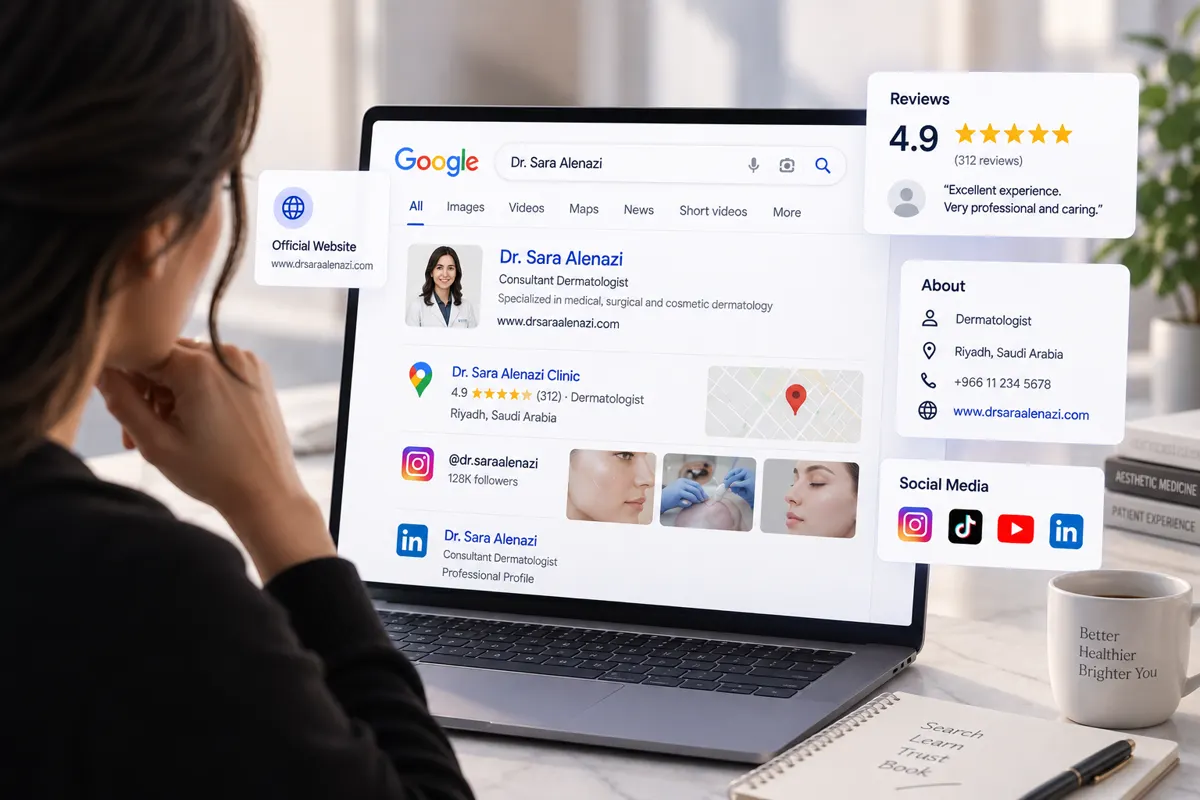
What Does a Patient Find When They Search Your Name on Google?
Before booking, a patient types the doctor’s name on Google. What do they see? How does the professional picture form from results, website, reviews, and social media?

The Doctor’s Personal Brand: What Is It and Why Does the Patient Choose Based on It?
A doctor’s personal brand is not a logo or fame. It is the impression a patient forms about you before the first appointment. What is it made of, and how do you build it professionally?